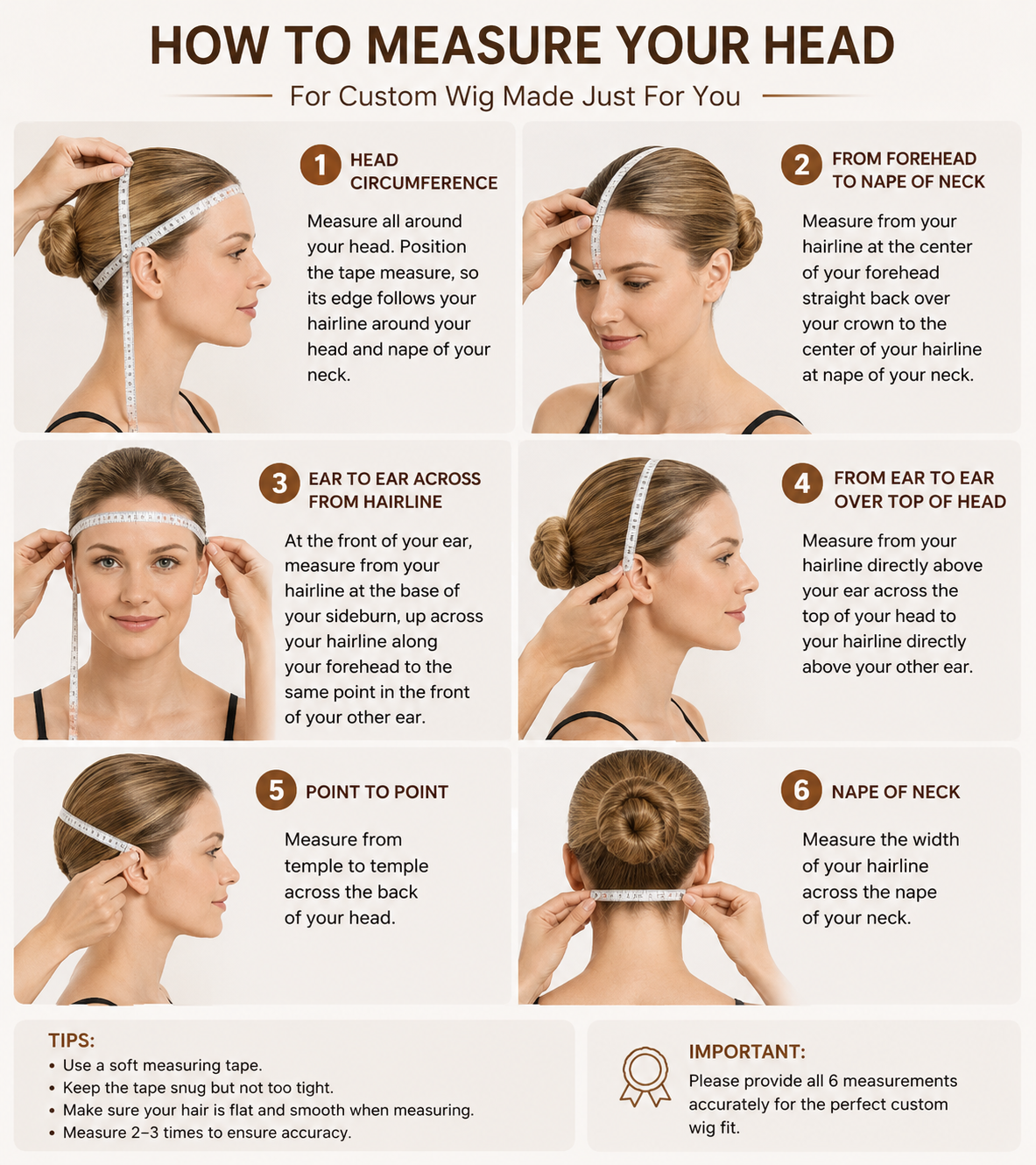
HOW TO MEASURE YOUR HEAD

Measurement

Important Notes

  • Always measure twice to ensure accuracy.
  • Keep hair flat or in a wig cap to avoid adding extra volume.
  • Don’t pull the tape too tight—it should be comfortable.
  • Record all measurements carefully; small differences can affect wig fit.
  • For layered or curly hair, it’s best to flatten or braid hair to get an accurate head circumference.

Quick Tips

  • Use a friend to help if you find it difficult to measure alone.
  • Mark the hairline lightly with a non-permanent eyeliner to align front-to-nape measurements.
  • Most wigs come with adjustable straps—so if you’re slightly off, you can still achieve a secure fit.

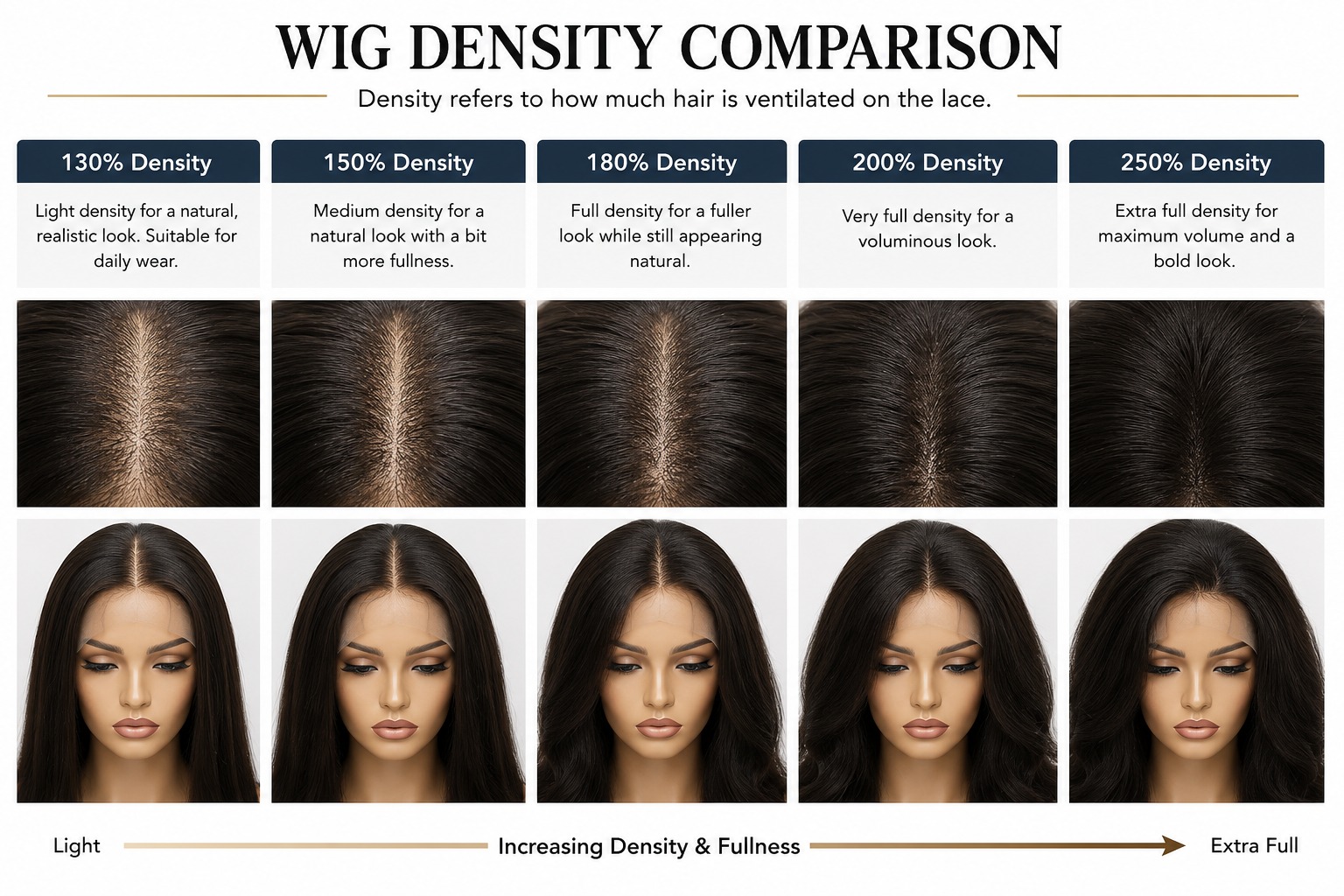
HOW TO CHOOSE HAIR DENSITY

content 3

1. Understand Common Density Levels

  • Light (120–130%): Looks natural and fine; ideal for everyday wear or a subtle look.
  • Medium (140–150%): Most popular; offers natural fullness without feeling heavy.
  • Heavy (160–180%): Full and voluminous; best for dramatic styles or those who want thicker hair.

Note: Percentage refers to the amount of hair relative to a standard full head of hair.

2. Consider Your Natural Hair

  • If your own hair is thin, a light or medium density wig blends more naturally.
  • For thicker natural hair, medium or heavy density can provide a balanced look.

3. Consider Style and Occasion

  • Casual, everyday wear: Light to medium density keeps the wig comfortable.
  • Special events or dramatic styles: Medium to heavy density gives a fuller, glamorous look.

4. Comfort Matters

  • Higher density wigs can feel heavier, especially for long hours.
  • Lighter densities are easier to style and maintain.

5. Quick Tips

  • Adjustable straps help fine-tune the fit for different densities.
  • If unsure, start with medium density, as it suits most faces and styles.
  • Remember: Less is sometimes more—natural-looking hair often looks best with moderate density.

HOW TO WEAR A WIG

placeholder