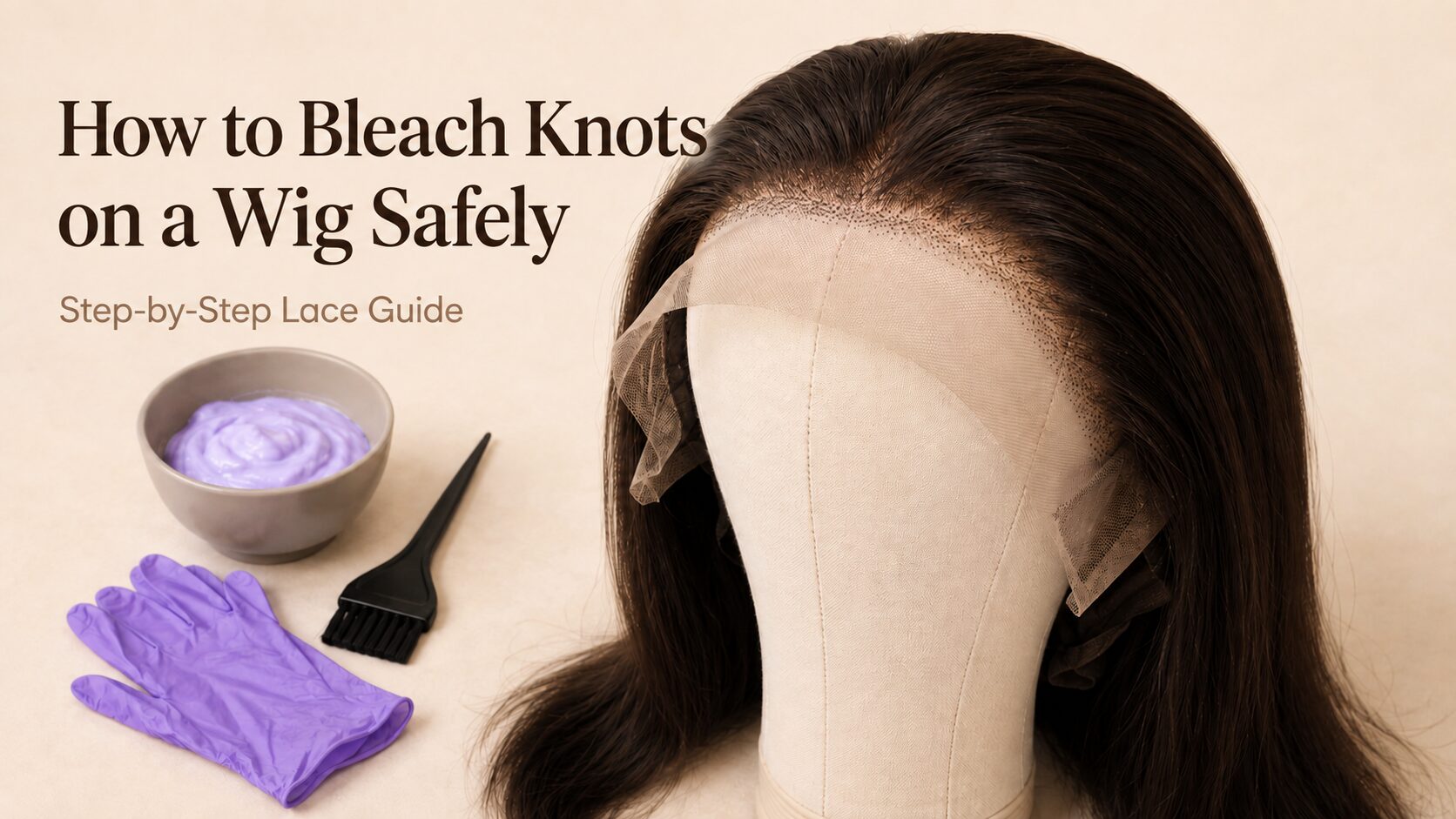
Dark knots can make an otherwise beautiful lace wig look dotted at the hairline. This practical guide explains how to bleach wig knots safely, choose the right developer, avoid over-processing and create a more natural-looking lace hairline.
Updated September 1, 2026
Human Hair Wig Care
Lace Wig Guide
Quick answer: How do you bleach knots on a wig?
To bleach knots on a human-hair lace wig, turn the wig inside out, secure the lace flat and apply a thick lightening mixture to the knots from the underside. Follow the exact instructions for your lightener and developer, check a small section frequently and rinse when the knots reach a natural warm-tan or light-brown colour.
The goal is to soften the appearance of the knots—not to make them completely white. Over-processing can weaken the knots and increase shedding.
What Are Wig Knots—and Why Do They Matter?
On a hand-tied lace wig, individual hairs are secured to the lace with small knots. With dark human hair, these knots can appear as tiny dark dots against the lace and may be especially noticeable along the part and front hairline.
Bleaching partially lightens the pigment in the knots, reducing the contrast between the hair and the lace. When done carefully, this can create the appearance of hair growing more naturally from the scalp.
The goal is not to make every knot white. A soft tan or light-brown knot can look more natural while retaining more of the strength that keeps the hair attached to the lace.
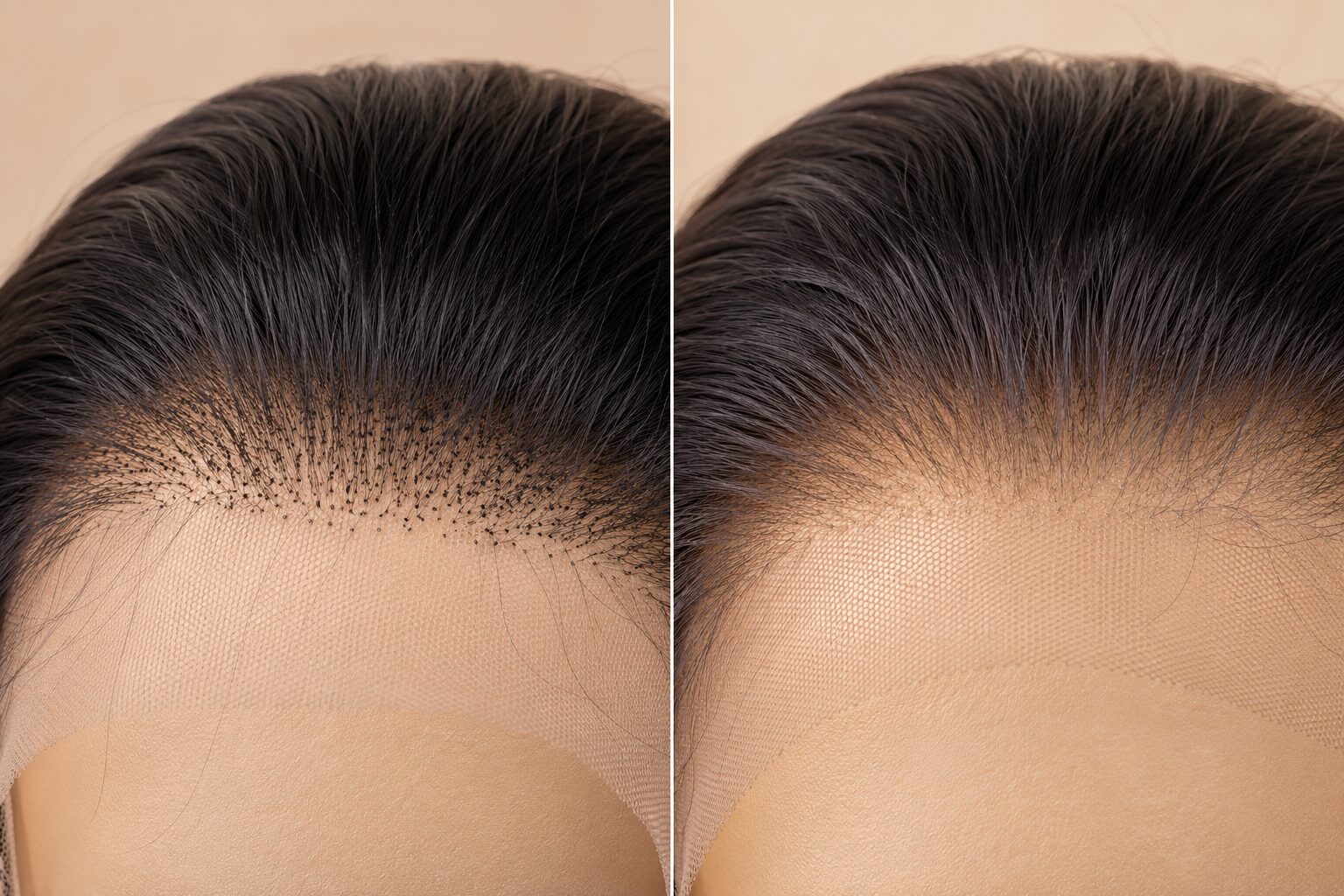
Before: Visible Dark Knots
After: Softer Natural Appearance
A good result reduces the appearance of dark dots without turning the knots white or unnecessarily damaging the lace.
Should You Bleach Your Wig Knots?
Not every wig needs knot bleaching. Before applying any chemical product, consider the wig's fibre, lace construction, condition and whether the knots are already lightened.
Bleaching May Help When…
The wig is made from human hair.
The hair is hand-tied to suitable lace.
Dark knots are clearly visible at the part or front hairline.
The lace is intact and the knots feel secure.
A hidden test section responds evenly to the lightener.
Do Not Bleach When…
The wig is synthetic or the fibre type is unknown.
The knots are already naturally light or pre-bleached.
The lace is torn, brittle or already shedding.
The construction is not intended for chemical processing.
The manufacturer specifically advises against bleaching.
Check the Construction, Not the Price Tag
Terms such as “Swiss lace”, “HD lace” and “transparent lace” describe different materials or appearances, but the name alone does not guarantee that the lace can tolerate chemical processing.
Always check the wig maker's care instructions first. If the wig is expensive, custom-coloured, heavily processed or difficult to replace, having a professional wig stylist assess it before bleaching can be the safer option.
Best Practice: Always Test a Hidden Section
Mix only a small amount according to the product label and test a rear or side section that will not be visible when worn. Let the area dry before judging the final colour, lace condition and shedding.
Bleach or No Bleach? A Quick Decision Guide
If you're unsure whether bleaching is appropriate, use this quick guide before you begin.
Wig Type or Condition
Bleach Knots?
Why
Human hair with obvious dark knots
Usually worth considering
Bleaching can reduce the contrast of visible knots.
Pre-bleached knots
Usually no
Additional processing may increase shedding without providing much visual improvement.
Synthetic wig
No
Synthetic fibres do not lighten in the same way as human hair.
Very delicate or damaged lace
No
Chemical processing can make fragile lace more vulnerable to damage.
Already natural-looking knots
No
If the knots already blend well, further processing is unnecessary.
Unknown fibre or construction
Do not bleach until confirmed
Identify the material and check the manufacturer's care instructions first.
What Should Bleached Wig Knots Look Like?
One of the most common mistakes when bleaching lace knots is aiming for a completely invisible or white result. In practice, the most natural-looking knots are often slightly warm rather than pure white.
Too Dark
The knots remain clearly visible as dark dots and create noticeable contrast against the lace.
Ideal
The knots are softened to a natural tan or light-brown tone and blend more easily with the lace and scalp.
Too Light
White or pale-yellow knots can indicate over-processing and may be accompanied by weakened knots or increased shedding.
A Simple Rule
If the knots already look natural when the wig is dry, there is usually no benefit in continuing to lighten them simply because the timer has not reached a particular number of minutes.
How to Hide Wig Knots Without Bleach
If you are unsure about chemical processing, reversible cosmetic methods can reduce the appearance of dark knots with much less risk to the lace.
Scalp-Toned Concealer
Turn the wig inside out and press a thin layer of scalp-toned concealer onto the underside of the lace around the part and hairline. Choose a shade that matches your scalp rather than automatically choosing the colour of your face.
Lace Tint
A purpose-made lace tint can reduce contrast across a larger area. Apply lightly and build up thin layers rather than saturating delicate lace.
Knot Concealer
Temporary knot-concealing products can create a scalp-coloured effect on the underside of the lace and can be refreshed when your preferred colour or styling changes.
Careful Part Styling
Reducing excessive density around a part can make the hairline look less uniform. Pluck carefully, one hair at a time, and avoid repeatedly pulling from the same lace hole.
What You Need to Bleach Wig Knots
When people search for products to bleach lace and knots, it is easy to focus on developer strength. A safer approach starts with identifying the wig, controlling the application and preparing everything before mixing.
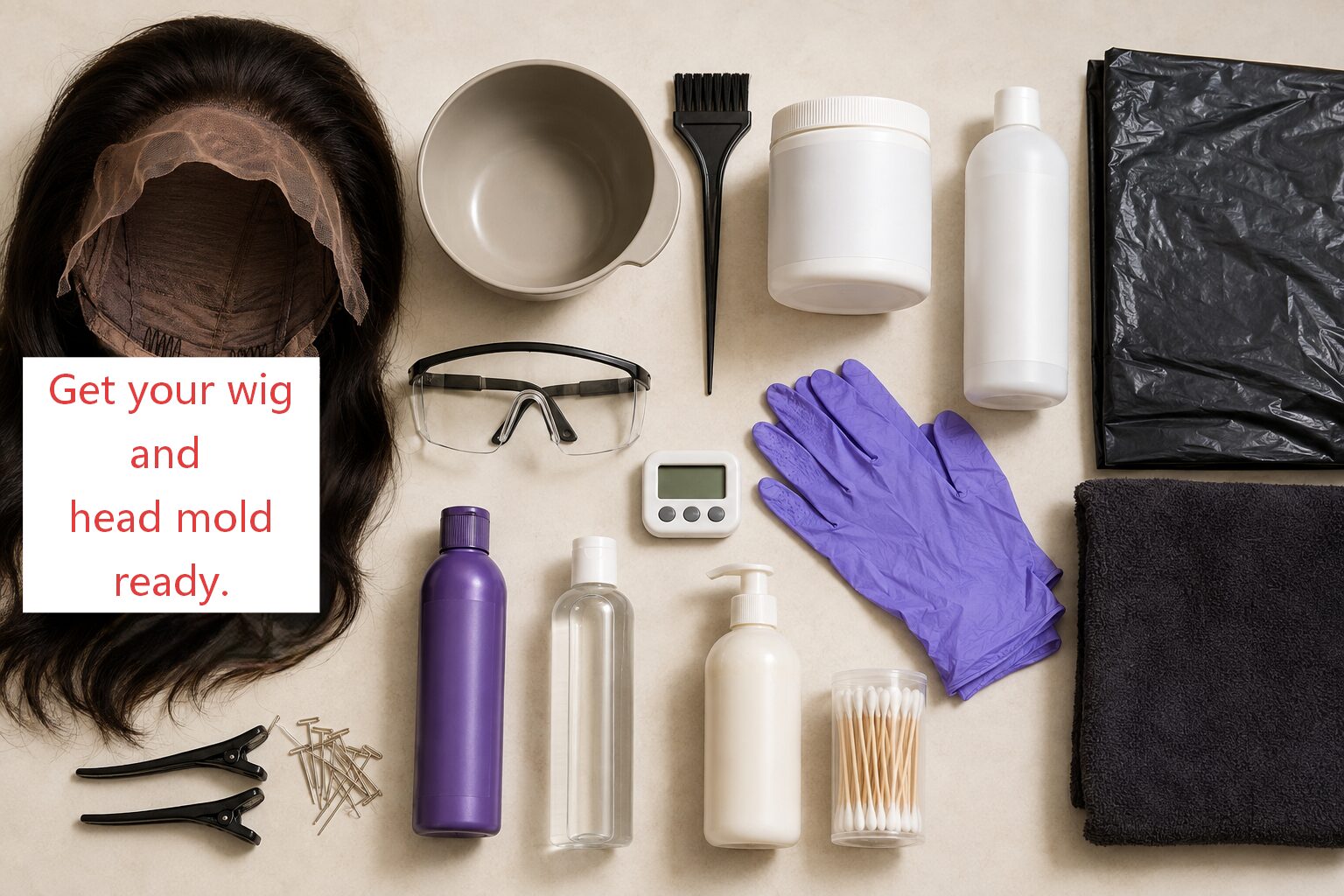
Prepare everything before mixing. Once lightener touches the knots, you should be ready to monitor the process continuously.
Essential Products and Tools
Professional hair lightener or bleaching powder
Compatible cream developer
Non-metal bowl and tint brush
Nitrile gloves and protective eyewear
Timer
Old towel and well-ventilated workspace
Canvas head or flat foam board
T-pins and clips
Manufacturer-recommended cleanser
Rich conditioner
Optional Helpers
Protective product for the hair lengths if compatible with your method
Purple shampoo for excessive warmth after processing
Cotton swabs for small spot checks
Suitable bond-building treatment after processing
Chemical Safety
Wear gloves and eye protection, avoid breathing lightening powder, work in a well-ventilated area and keep chemical products away from children and pets. Never mix products unless their labels specifically instruct you to do so.
If a chemical product gets into the eyes or onto the skin, follow the product's first-aid instructions and your local poison or medical guidance.
Which Developer Volume Should You Use for Wig Knots?
Developer strength affects how quickly the hair can lighten, but there is no universal processing time. Hair history, knot size, lace construction, temperature and the lightener formula can all affect the result.
The manufacturer's instructions and your hidden test section should always take priority over an online timetable.
Developer
Typical Consideration
Control
Practical Guidance
10 vol / 3%
Gentler lifting when permitted by the lightener manufacturer
Slowest
May not provide enough lift on very dark knots. Do not compensate by extending processing beyond the manufacturer's maximum time.
20 vol / 6%
Often easier to control for at-home applications when permitted
More forgiving
A commonly considered starting point for beginners because it provides more control than stronger developers.
30 vol / 9%
Faster lifting for resistant knots
Smaller margin for error
Better suited to experienced users who understand the product and can monitor the process closely.
40 vol / 12%
High-strength developer
Highest risk
Not recommended as a default DIY choice for lace-knot bleaching.
Why You Should Not Rely on “20 Minutes”
A timer is a reminder to check—not proof that the knots are ready. Start checking early, compare the result with your test section and stop when the desired natural colour has been reached.
If the knots have not lifted within the maximum time stated by the product manufacturer, rinse rather than improvising a longer session.
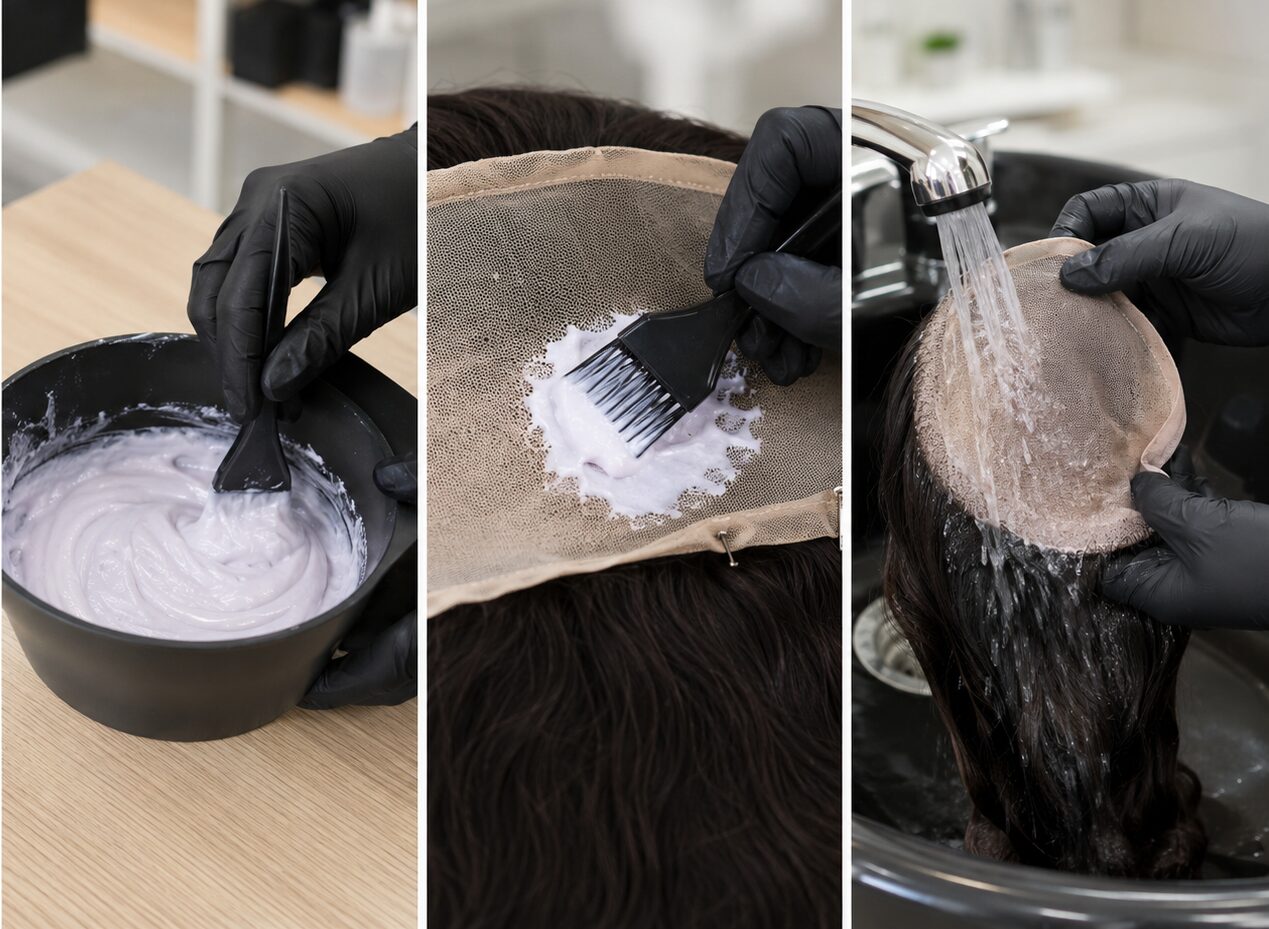
How to Bleach Knots on a Wig: 8 Steps
Work from preparation to rinsing without leaving the wig unattended.
Read the Labels and Test First
Confirm that the lightener and developer are compatible and that the wig maker permits chemical processing.
Test a hidden section first and allow it to dry before judging the final colour, lace condition and shedding.
Prepare a Dry, Detangled Wig
Keep the hair dry unless the lightener instructions say otherwise. Gently detangle the hair and move baby hairs and loose strands away from the lace before turning the cap inside out.
Secure the Lace Flat
Pin the wig to a canvas head or foam board without stretching the mesh. The underside of the lace should face you. Keep the hair lengths away from the mixing area.
Mix the Lightener Correctly
Follow the mixing ratio specified by the product manufacturer. Do not assume every formula uses the same ratio.
The mixture should be thick enough to sit on the lace without running through the holes.
Gently Dab the Mixture onto the Knots
Use the flat side of a tint brush to gently dab a small amount onto the knots from underneath. Do not scrub, sweep aggressively or press the product through the lace.
Start with the most visible areas around the front hairline and part rather than automatically processing the entire cap.
Monitor the Knots Closely
Check a small section frequently once lifting begins. Remove a little product from a few knots with a damp cotton swab so you can see the actual colour underneath.
Look for a natural warm-tan or light-brown colour. Do not continue processing simply to make the knots pale white.
Rinse Thoroughly
With gloves on, rinse promptly when the desired result is reached. Direct the water away from the hair lengths where possible and continue rinsing until all lightener has been removed.
Use the shampoo or post-lightening cleanser recommended by the manufacturer.
Condition and Air-Dry
Apply a rich conditioner to the hair while avoiding unnecessary rubbing or tangling around the lace.
Rinse gently, blot with a towel and allow the wig to air-dry on a stand. Judge the final colour and strength only after the wig is completely dry.
Prefer to Skip DIY Knot Bleaching?
A wig with a natural-looking lace construction can save you from unnecessary chemical processing. Explore our
human hair wigs
or contact the Wattle & Lace team for help choosing a suitable lace and cap construction.
Common Wig Knot Bleaching Mistakes—and How to Fix Them
Problem
Likely Cause
What to Do Next
Hair roots turned orange or blonde
The mixture seeped through the lace or was applied with too much pressure.
Rinse immediately. Once dry, assess the affected roots before attempting any colour correction.
Patchy dark knots remain
Uneven application, product buildup or different processing rates.
Do not immediately re-bleach the entire unit. Consider cosmetic concealer or carefully assess whether spot correction is appropriate.
Knots remain dark after the maximum processing time
Resistant knots, previous colour treatment or an unsuitable process.
Rinse rather than extending the process. An intact dark knot is safer than a weakened knot.
Hairline starts shedding
Over-processing, repeated bleaching, rough brushing or excessive plucking.
Stop chemical processing and minimise tension. Consider professional wig repair if shedding continues.
Lace feels stiff or brittle
Residue, over-processing or unsuitable chemical products.
Rinse again if residue is suspected, air-dry gently and avoid pulling the lace.
What to Do If You Over-Bleach Wig Knots
Over-bleached knots may appear pale yellow or white, feel weak, shed or begin breaking away from the lace. Unfortunately, chemical damage cannot be completely reversed.
Stop and rinse.
Remove the product promptly according to the manufacturer's instructions.
Condition gently.
A rich conditioner or suitable bond-building treatment may improve the feel of the hair, but it cannot rebuild knots that have already dissolved.
Check strength before correcting colour.
If the knots remain intact but look too pale, professional colour correction may be possible.
Use cosmetic camouflage.
Scalp-toned concealer or knot tint can reduce contrast without another round of bleaching.
Repair rather than reprocess.
If shedding has started, avoid further bleaching, aggressive plucking and unnecessary tension.
Do You Need to Bleach Pre-Bleached Wig Knots?
Usually, no. If your wig already has pre-bleached knots that blend naturally with the lace and your scalp, additional bleaching is unnecessary.
Repeated processing can make small hand-tied knots more vulnerable to shedding. If only a few darker knots remain, consider whether a small amount of cosmetic concealer or lace tint would solve the issue without exposing the entire hairline to another chemical treatment.
When buying a new wig, check whether the knots are already pre-bleached or designed to create a natural-looking hairline. Choosing the right construction from the beginning can be easier than correcting it later.
Looking for a Natural-Looking Lace Wig?
Explore our
human hair wigs
to compare lace construction, cap design and available styles.
Aftercare: How to Help Bleached Knots Last Longer
Wash less frequently and use gentle, wig-compatible products.
Detangle from the ends upward while supporting the lace.
Avoid scratching the part with comb teeth or fingernails.
Keep heavy oils and conditioner away from the knots where possible.
Limit high heat around the roots.
Never aim very hot air directly at delicate lace.
Store the wig clean, dry and supported on a stand.
Keep the wig away from prolonged direct sunlight during storage.
Bleached Knots vs. Natural-Looking Knots: Which Is Better?
Bleaching is only one way to create a natural-looking hairline. The quality of the lace, knot size, hair density, ventilation and overall cap construction can be just as important.
If you are choosing a new wig, consider the construction before deciding that you need to bleach the knots yourself. A well-designed human-hair wig can provide a natural appearance without requiring aggressive DIY processing.
If you are unsure which wig construction is right for you, you can
contact Wattle & Lace
for guidance before purchasing.
Frequently Asked Questions About Bleaching Wig Knots
Can you bleach knots on a synthetic wig?
Generally, no. Synthetic fibres do not lighten in the same way as human hair, and chemical lightener can damage the fibre or lace. Consider lace tint, concealer or a knot-covering product instead.
How long should bleach stay on wig knots?
There is no universal safe processing time. Follow the lightener manufacturer's maximum time, test a hidden section first and inspect the knots frequently. Rinse when the desired natural colour is reached.
Is 20 or 30 volume developer better for wig knots?
When permitted by the lightener manufacturer, 20-volume developer is often easier for at-home users to control than stronger developers. Thirty volume works faster but leaves a smaller margin for error and is better suited to experienced users.
Should I bleach all the knots or only the front?
Only process the areas that need to appear like exposed scalp. For many lace-front wigs, this may include the front hairline and visible part. Limiting the processed area can reduce unnecessary chemical stress.
Why did my wig roots turn orange after bleaching?
The lightening mixture may have seeped through the lace and reached the hair shafts. A mixture that is too thin, excessive brush pressure or stretching the lace can contribute to seepage.
Does purple shampoo stop the bleaching process?
No. Purple shampoo is designed to tone visible yellow tones. It does not replace thorough rinsing or the post-lightening cleanser recommended by the product manufacturer.
Can I bleach pre-bleached wig knots again?
Usually, additional bleaching is best avoided when the knots already look natural. Reprocessing can increase the risk of shedding. If a few dots remain, cosmetic knot concealer may be a lower-risk option.
How can I make wig knots look natural without bleaching?
Lace tint, scalp-toned concealer, knot concealer and careful part styling can all reduce the appearance of dark knots without chemical processing.
Where can I buy human hair wigs in Australia?
When comparing Australian wig retailers, look at the hair type, lace construction, cap design, density, knot treatment, care instructions and return policy rather than price alone. Choosing a suitable construction from the beginning can reduce the need for DIY chemical processing.
W&L
Wattle & Lace Wig Care Team
This guide was prepared to help human-hair wig wearers make safer, better-informed decisions about lace and knot care.
Product formulas and wig construction vary, so always follow the instructions supplied by your wig manufacturer and chemical product manufacturer.
Editorial note:
Processing behaviour varies according to the lightener, developer, hair history and lace construction. The guidance above is educational and should not replace the exact instructions provided by the product manufacturer or professional advice where appropriate.
About Lisa
15 years of experience in the wig industry
Extensive experience in human hair wigs, wig construction, fit, hair quality and styling. Dedicated to helping women find natural-looking hair that feels comfortable and truly suits them.
HOW TO WASH YOUR HUMAN HAIR WIG
Keep your wig soft, smooth and beautiful with the right care routine.A gentle step-by-step guide to cleaning and caring for vour human hair wig.
WHAT YOU’LL NEED
...
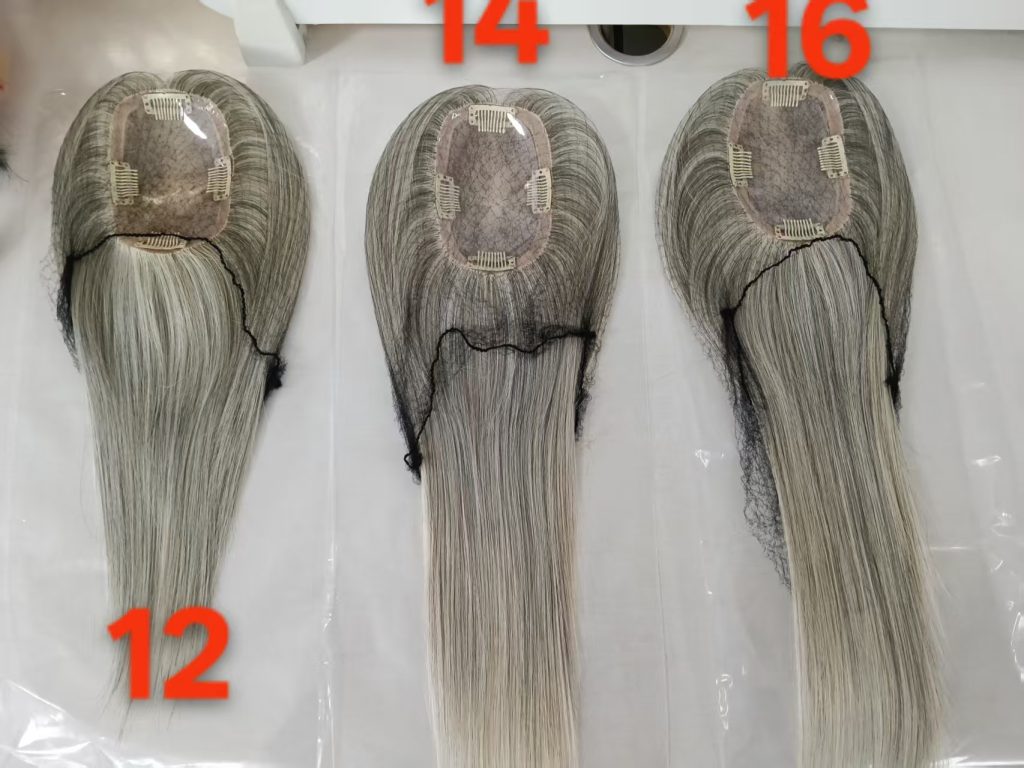
Discover how to choose the right hair topper for thinning hair, from base size and secure attachment to natural hairlines, colour matching and everyday care.
Using wig tape for the first time can feel fiddly. The strips are small, the lace needs to sit in exactly the right place, and once the tape touches your skin, repositioning can be difficult.
...
European Remy human hair is human hair described as originating from Europe, with the strands arranged so their cuticles face the same direction. The term combines two distinct descriptions: European refers to the stated...
What Is a Human Hair Wig?
Image source:European Human Hair Wig-Teagan wig
A human hair wig is made from real human hair, giving it the natural movement, texture and light reflection...
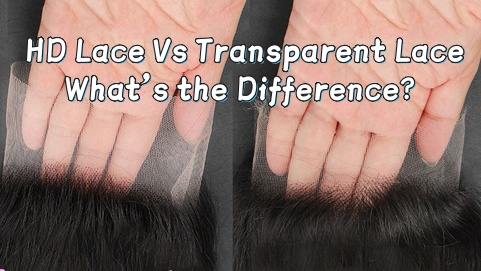
If you're shopping for a womens wig, you've probably seen HD lace and transparent lace listed as two different options. They can look almost identical in a product photo, which makes the choice a little confusing.
...
If you’ve been scrolling through dozens of tabs trying to figure out where to buy a decent piece of alternative hair, I get it. It’s overwhelming. Between dodgy overseas websites, glossy social media...
A beautiful wig should never look like you’re wearing a wig. The right colour, texture, density and fit can make all the difference to how natural and confident you feel. If you’re wondering how to choose a European huma...
WIG GUIDE
Choosing between a glueless wig and an lace glue for wigs comes down to more than how the wig stays on. Comfort, security, hairline appearance and your everyday routine all play a part.
If you prefer a wi...
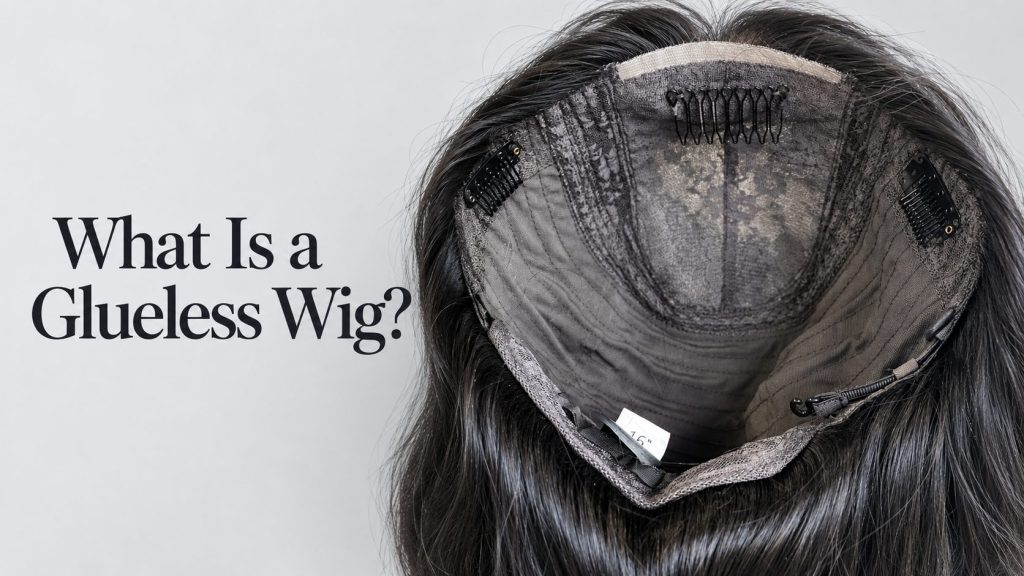
If you are new to wigs, you may have come across the term glueless wig and wondered how a wig can stay in place without glue. The answer is simpler than it sounds: a glueless wig is designed around the fit and constructi...
European human hair wigs are among the more premium options available in Australia, but there is no single price that applies to every wig. Length, hair quality, density, lace construction, cap design, colour and customi...