If you've been shopping for a human hair wig, you've probably come across three names:
European hair, Asian hair, and Brazilian hair.
But what do these terms actually mean—and which one is best?
The answer depends on the look you're after. European hair is usually valued for
fine texture and natural movement. Asian hair is known for thicker strands and
density, while Brazilian hair is commonly chosen for fullness, body, and texture.
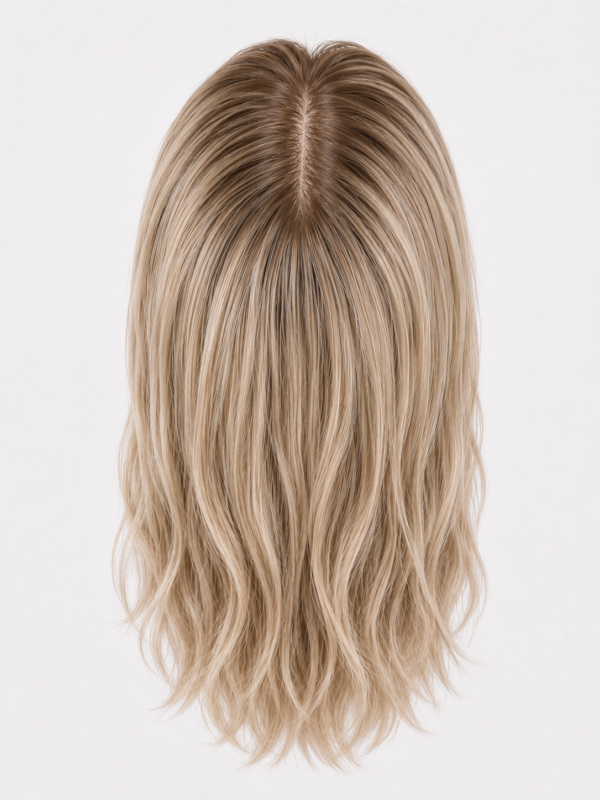
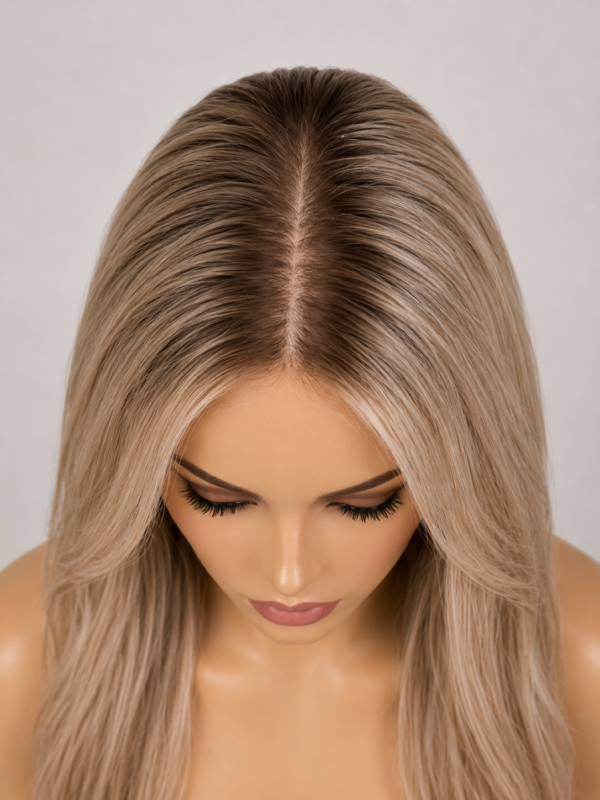
If I were choosing a luxury wig for the most natural-looking finish,
European hair would be my first choice.
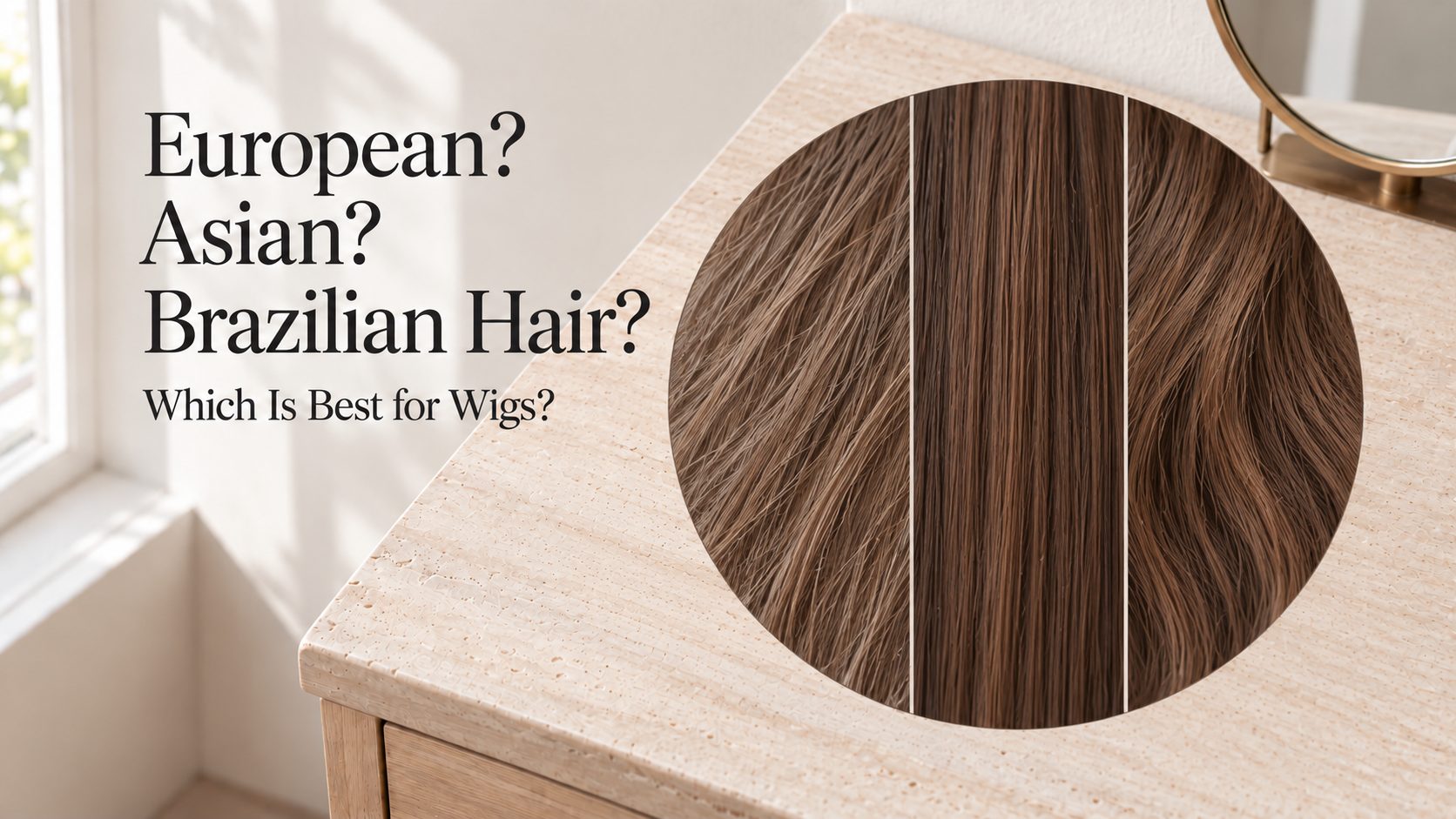
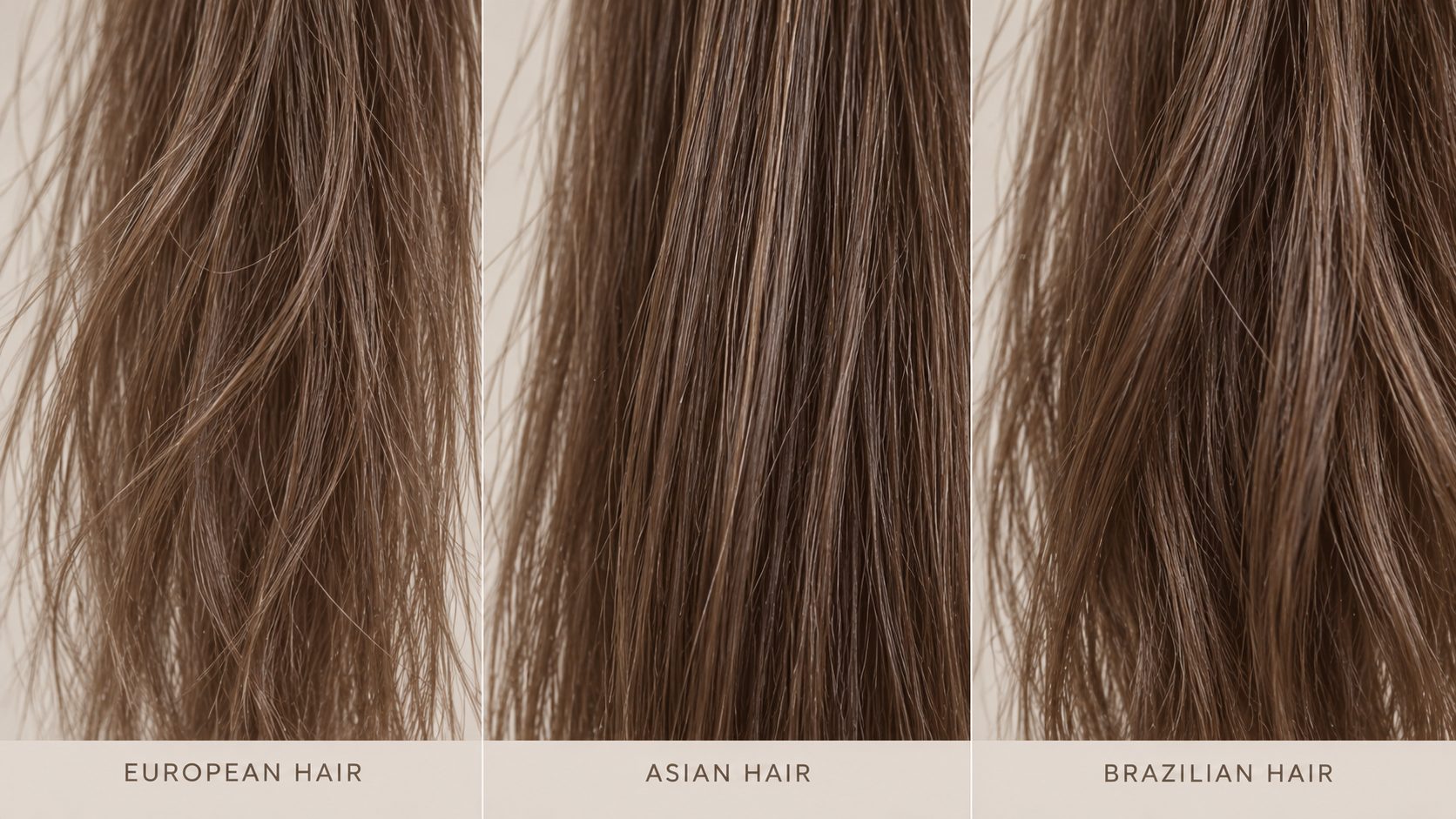
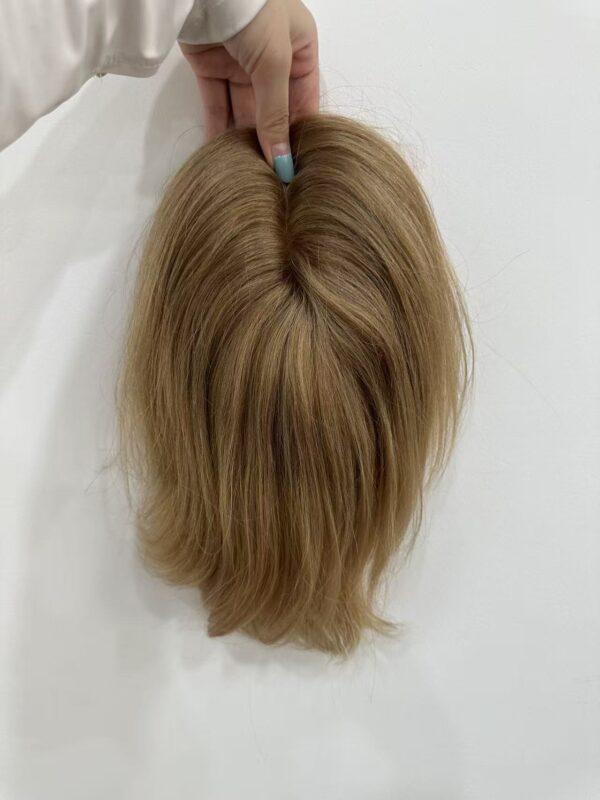
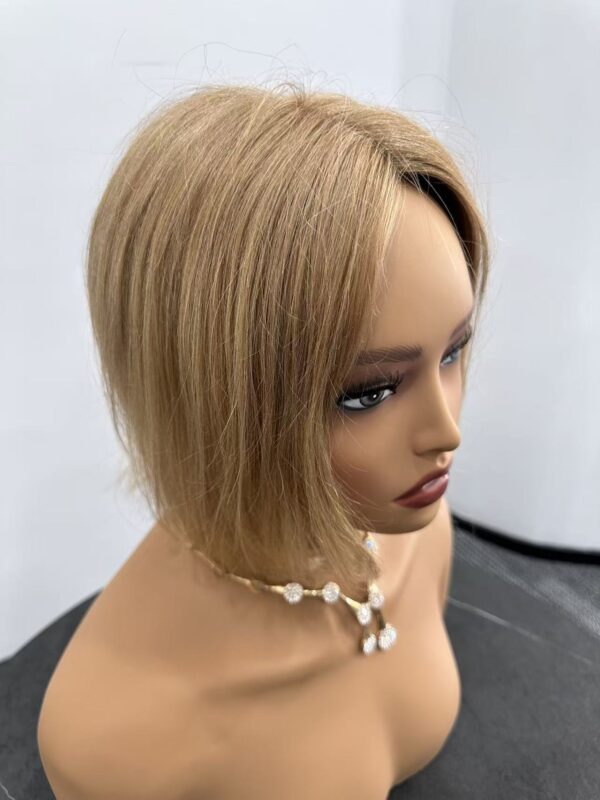
European, Asian, and Brazilian human hair can create very different wig looks.
The short answer
European hair is my pick for a fine, lightweight,
natural-looking luxury wig. Asian hair makes more sense
when density is the priority, while Brazilian hair is
a strong choice for volume and body.
In the wig industry, these names are mainly used to describe the stated
origin or sourcing category of the hair, along with characteristics commonly
associated with it.
European Hair
European hair refers to human hair described as being sourced from European
donors. In the wig market, it is particularly valued for its
fine strands, softness, natural movement, and lighter feel.
Asian Hair
Asian hair refers to hair sourced from Asian donors. It is generally known
for thicker individual strands, density, and a naturally strong,
full appearance.
Brazilian Hair
Brazilian hair refers to hair marketed as being sourced from Brazil.
It is commonly associated with fullness, body, and versatility,
although the actual texture can vary considerably.
So don't think of this as "which country has the best hair?"
Think about what you want your wig to look and feel like.
European vs Asian vs Brazilian Hair at a Glance
European Hair
Asian Hair
Brazilian Hair
Typical texture
Fine and soft
Thicker
Varies
Density
Light to medium
Usually dense
Medium to high
Movement
Soft and natural
More structured
Full and flowing
Volume
Subtle
Fuller
Voluminous
Best for
Natural-looking wigs
Dense styles
Volume and body
If I had to sum them up in three words:
European = refined. Asian = dense. Brazilian = full.
What Is European Hair?
"European hair" does not mean that the hair originated in Europe. "European hair" refers to hair from Anglo-Saxon or European-origin countries.
European hair is especially valued in the wig market for its
fine texture, softness, and natural movement.
And this is where I think it has a real advantage.
A natural-looking wig doesn't necessarily need a lot of hair.
Too much density can make a wig look heavy or overly styled.
Fine European hair can create a lighter, more understated appearance.
Instead of looking like you've added a huge amount of hair, it can simply
look like you have really good hair.
I'd look at European hair first if you want:
Fine texture
Soft movement
A lightweight feel
Subtle volume
A refined, luxury finish
One important point: not every wig labeled "European" will have exactly
these qualities. Processing, density, and construction matter too.
Don't buy the label. Look at the actual hair.
What Is Asian Hair?
Asian hair generally has thicker individual strands and a denser
appearance. It is also commonly straight and naturally dark,
although there is plenty of individual variation.
For wigs, that can be a real advantage if you want fullness.
An Asian hair wig can be a good choice if you want:
Thicker-looking hair
Higher density
Fuller styles
A stronger, more structured appearance
If you want a lot of hair, I wouldn't choose European hair simply because
it sounds more luxurious.
Sometimes density is exactly what you want.
What Is Brazilian Hair?
Brazilian hair is one of the most familiar names in the human hair wig market.
It's commonly associated with fullness, body, and texture.
Brazilian hair can be straight, wavy, or curly, so don't assume every
Brazilian wig will have the same texture.
If volume is your priority, this is the option I'd look at first.
Brazilian human hair wigs are often a good fit if you want:
More body
Fuller-looking hair
Waves or curls
A glamorous, voluminous finish
If European hair is about refinement,
Brazilian hair is about impact.
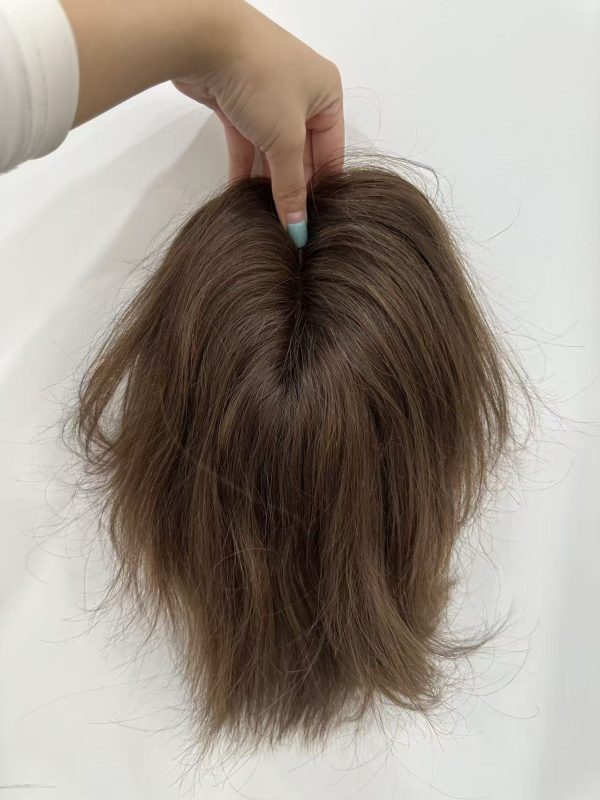
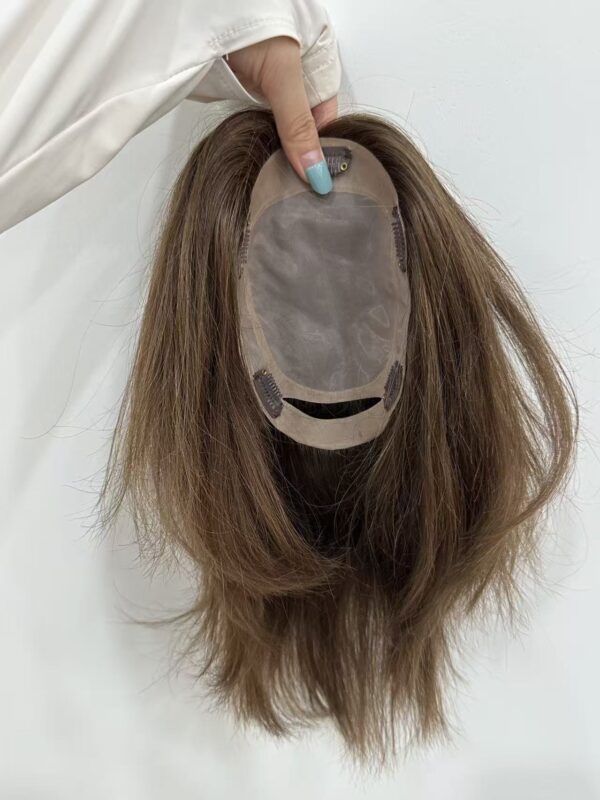
Strand thickness and density can make a noticeable difference in how a wig looks and feels.
European vs Asian vs Brazilian Hair: The Real Difference
The differences that matter most when buying a wig are
strand thickness, density, movement, and volume.
Strand Thickness
European hair is typically finer, while Asian hair generally has thicker
individual strands. Brazilian hair varies depending on the source and processing.
This affects how substantial the finished wig looks and feels.
Density
Don't confuse density with strand thickness. Fine hair can still be very dense,
while thicker hair can have lower density.
For wigs, European hair is often attractive when you want a lighter overall
appearance. Asian hair can create a fuller look, while Brazilian hair is
commonly chosen for body and volume.
Movement
This is probably what I notice most when comparing wigs.
A good European hair wig can move softly and naturally without looking overly styled.
Asian hair tends to have a stronger, more substantial feel. Brazilian hair can
give you more visible body and movement.
For an everyday wig, I personally prefer the softer movement of European hair.
If natural means full, glamorous, and voluminous, Brazilian
hair can look fantastic.
If natural means fine, lightweight, subtle, and believable,
I'd choose European hair.
For me, the biggest advantage of European hair is simple:
It doesn't have to look like a wig.
Fine strands, lighter density, soft movement, and subtle volume can create
a much more understated result.
The goal isn't to make the wig look impressive from across the room.
The goal is to make someone wonder whether you're wearing one at all.
That's why European hair is my first choice for a
natural-looking luxury wig.
What Are Virgin European Hair Wigs?
Here's an important distinction:
European describes the stated origin of the hair.
Virgin describes its processing history.
So European hair isn't automatically virgin hair, and virgin hair isn't
automatically European.
Virgin hair generally refers to hair that has not undergone the same level
of chemical processing as heavily bleached, dyed, or chemically treated hair.
If you're considering virgin European hair wigs, don't just
ask where the hair comes from. Ask how it has been processed too.
But you shouldn't pay a premium simply because a seller puts
"European" in the product title.
The price can reflect:
Hair sourcing and selection
Hair quality
Processing
Density
Lace and cap construction
Wig-making craftsmanship
Fine hair also needs careful handling and thoughtful density.
Expensive hair alone doesn't make a luxury wig.
Instead of asking:
"Is this European hair?"
Ask:
"What exactly am I paying for?"
Looking for a More Natural-Looking Wig?
Explore European human hair wigs designed around fine texture,
natural movement, lightweight feel, and a refined finish.Our products can be shipped worldwide, and customers in Brisbane, Australia enjoy an in-home try-on service.
Best for fine texture, lightweight movement, subtle volume,
and a natural-looking luxury finish.
Asian Hair
Best for thicker strands, higher density, fuller-looking hair,
and stronger hairstyles.
Brazilian Hair
Best for volume, body, fullness, waves, curls,
and a more dramatic look.
For natural-looking luxury, European hair would be my pick.
What Should You Check Before Buying a Human Hair Wig?
Don't stop at the hair origin. Before spending serious money on a wig,
I'd check these things first:
Is the hair virgin or processed?
How fine or thick are the individual strands?
How much density does the wig actually have?
Are the cuticles aligned?
How much does the finished wig weigh?
What type of lace and cap construction does it use?
Can you see how the hair moves?
Does the seller clearly explain the hair's origin and processing?
A good wig seller should be able to answer these questions clearly.
FAQs
Is European hair better than Brazilian hair?
Not for everyone. Brazilian hair is a strong choice for volume and body,
while European hair is particularly appealing for fine texture,
lightweight movement, and a natural-looking finish.
Is European hair better than Asian hair?
If you want fine, lightweight hair, I'd choose European hair.
If you want density and thicker-looking strands, Asian hair may be
the better option.
What is the difference between European and Brazilian hair?
European hair is generally associated with finer strands and softer movement,
while Brazilian hair is commonly chosen for fullness, body, and texture.
What is the difference between European and Asian hair?
European hair is typically finer, while Asian hair generally has thicker
strands and a denser appearance.
What are virgin European hair wigs?
They are wigs made with hair described as European in origin that is also
classified as virgin, meaning it has undergone limited or no chemical processing.
Always check how the seller defines "virgin hair."
What is the best human hair for a natural-looking wig?
For a fine, lightweight, understated look, European hair would be my first choice.
However, density, lace, construction, processing, and fit are also important.
Final Verdict
There isn't one hair type that's best for everyone.
Asian hair is about density. Brazilian hair is about volume. European hair is about refinement and natural movement.
If you want a fuller, more dramatic style, I'd look at Asian or Brazilian hair.
But if you want a wig that feels light, moves naturally, and looks like
your own hair—just better, European hair is hard to beat.
That's why European hair would be my pick for a
natural-looking luxury wig.
Don't pay extra for the word "European" alone.
Look at the hair. Look at the density. Look at the processing.
Look at the construction.
Find Your Ideal European Hair Wig in Wattle&lace
Want fine texture, natural movement, and a lightweight luxury feel?
Take a closer look at our European human hair wigs.Our products can be shipped worldwide, and customers in Brisbane, Australia enjoy an in-home try-on service.
15 years of experience in the wig industry
Extensive experience in human hair wigs, wig construction, fit, hair quality and styling. Dedicated to helping women find natural-looking hair that feels comfortable and truly suits them.
HOW TO WASH YOUR HUMAN HAIR WIG
Keep your wig soft, smooth and beautiful with the right care routine.A gentle step-by-step guide to cleaning and caring for vour human hair wig.
WHAT YOU’LL NEED
...
Discover how to choose the right hair topper for thinning hair, from base size and secure attachment to natural hairlines, colour matching and everyday care.
Using wig tape for the first time can feel fiddly. The strips are small, the lace needs to sit in exactly the right place, and once the tape touches your skin, repositioning can be difficult.
...
European Remy human hair is human hair described as originating from Europe, with the strands arranged so their cuticles face the same direction. The term combines two distinct descriptions: European refers to the stated...
What Is a Human Hair Wig?
Image source:European Human Hair Wig-Teagan wig
A human hair wig is made from real human hair, giving it the natural movement, texture and light reflection...
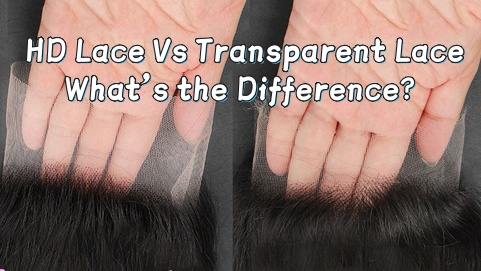
If you're shopping for a womens wig, you've probably seen HD lace and transparent lace listed as two different options. They can look almost identical in a product photo, which makes the choice a little confusing.
...
If you’ve been scrolling through dozens of tabs trying to figure out where to buy a decent piece of alternative hair, I get it. It’s overwhelming. Between dodgy overseas websites, glossy social media...
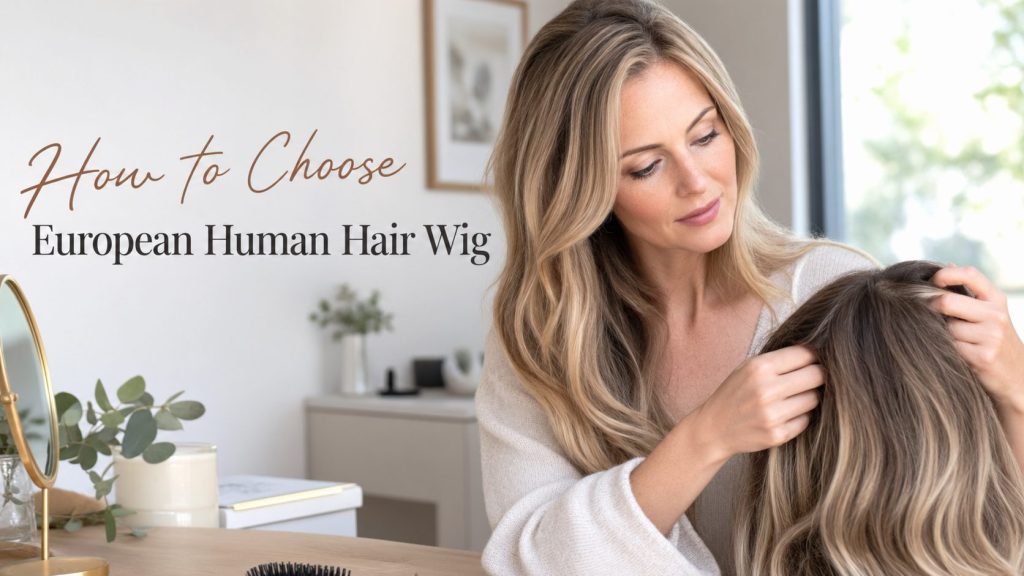
A beautiful wig should never look like you’re wearing a wig. The right colour, texture, density and fit can make all the difference to how natural and confident you feel. If you’re wondering how to choose a European huma...
WIG GUIDE
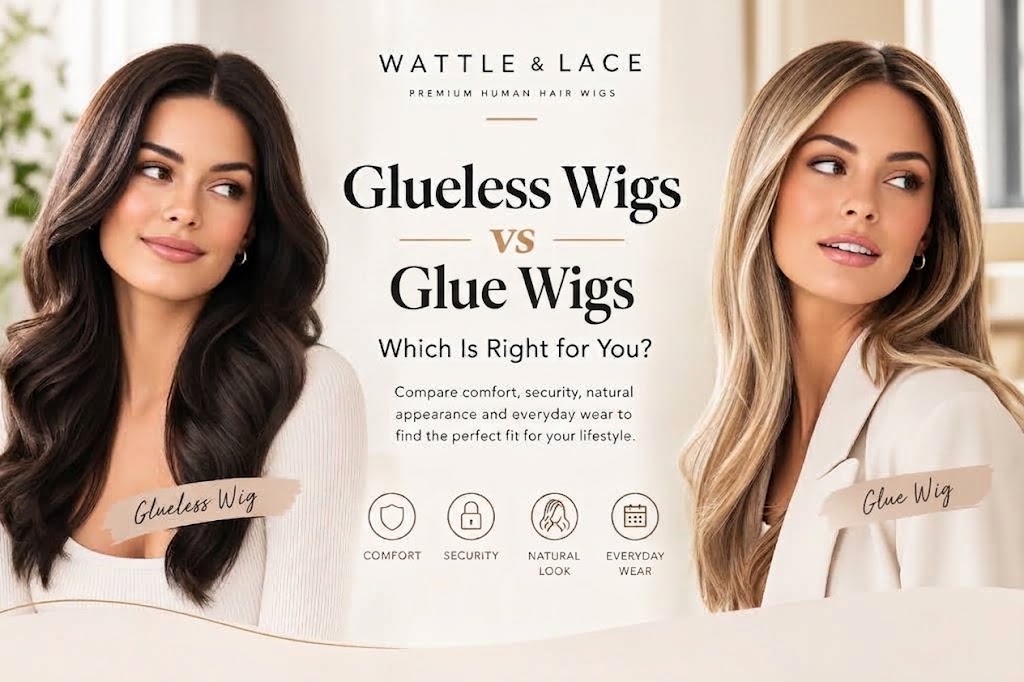
Choosing between a glueless wig and an lace glue for wigs comes down to more than how the wig stays on. Comfort, security, hairline appearance and your everyday routine all play a part.
If you prefer a wi...
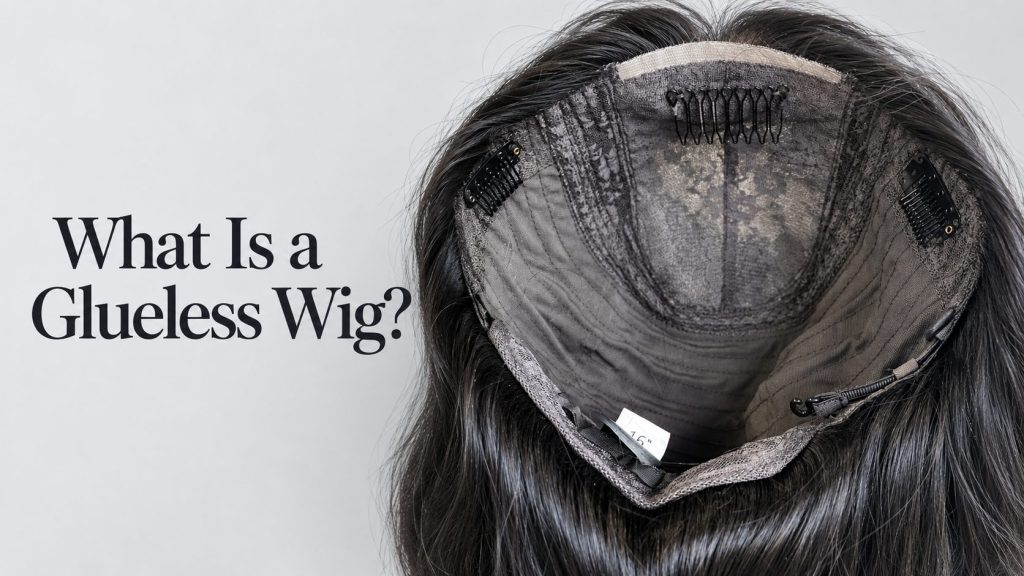
If you are new to wigs, you may have come across the term glueless wig and wondered how a wig can stay in place without glue. The answer is simpler than it sounds: a glueless wig is designed around the fit and constructi...
European human hair wigs are among the more premium options available in Australia, but there is no single price that applies to every wig. Length, hair quality, density, lace construction, cap design, colour and customi...