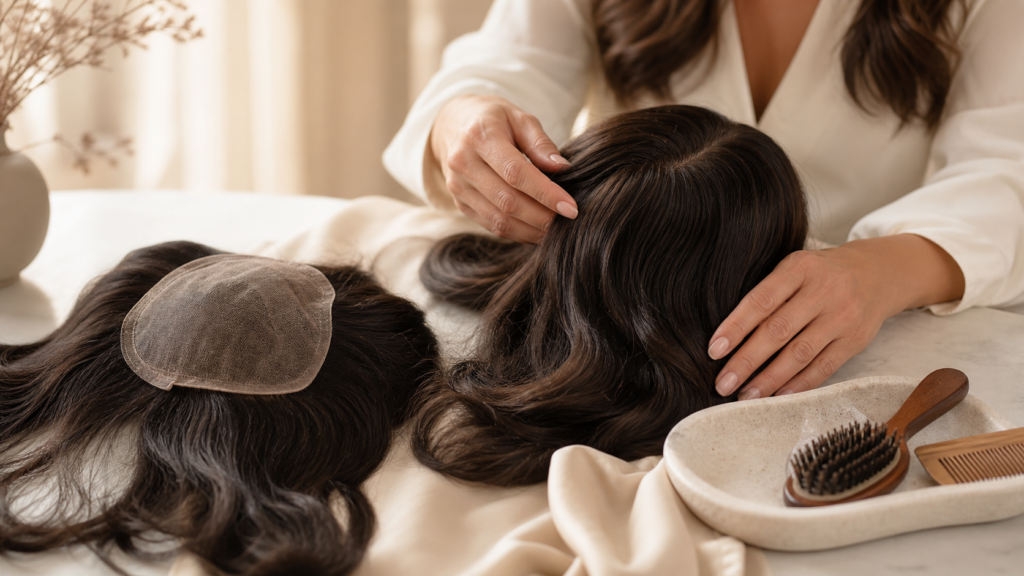
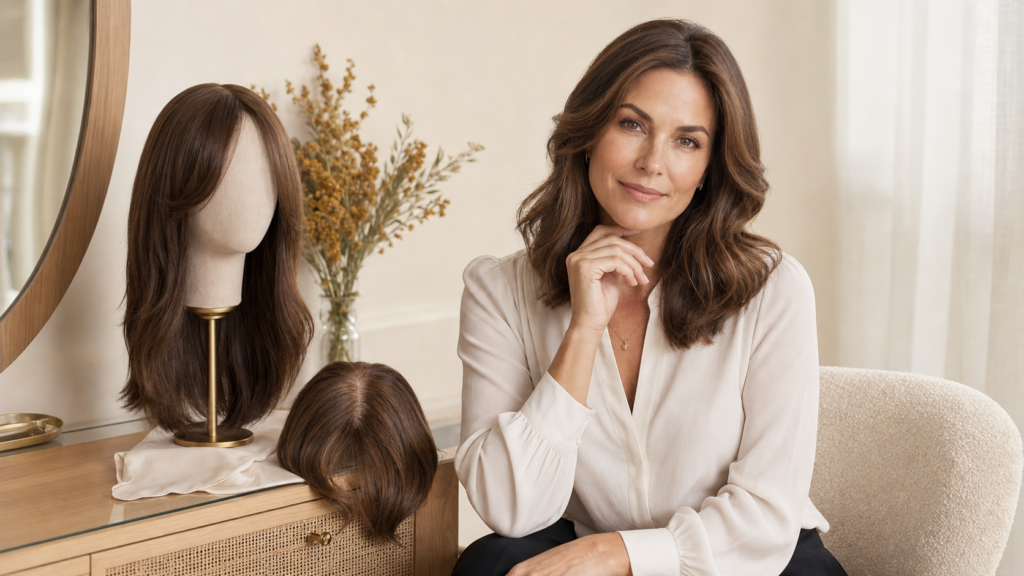
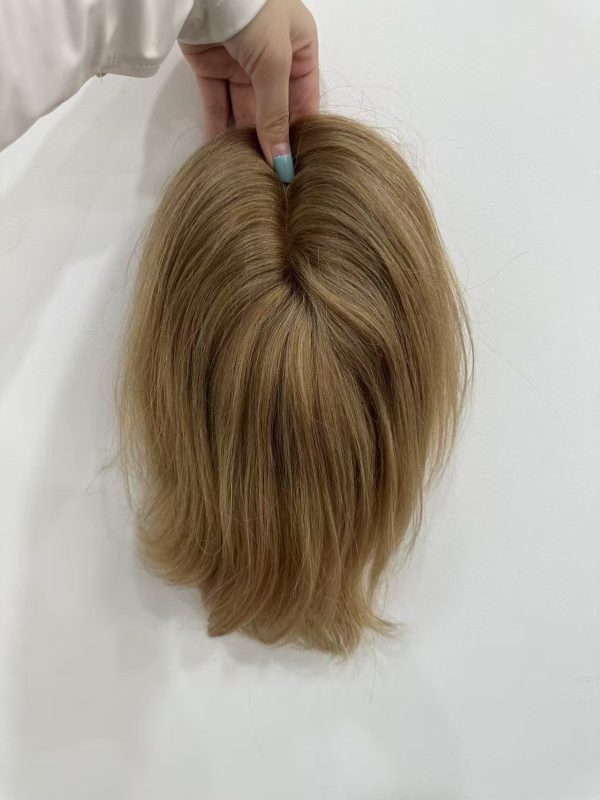
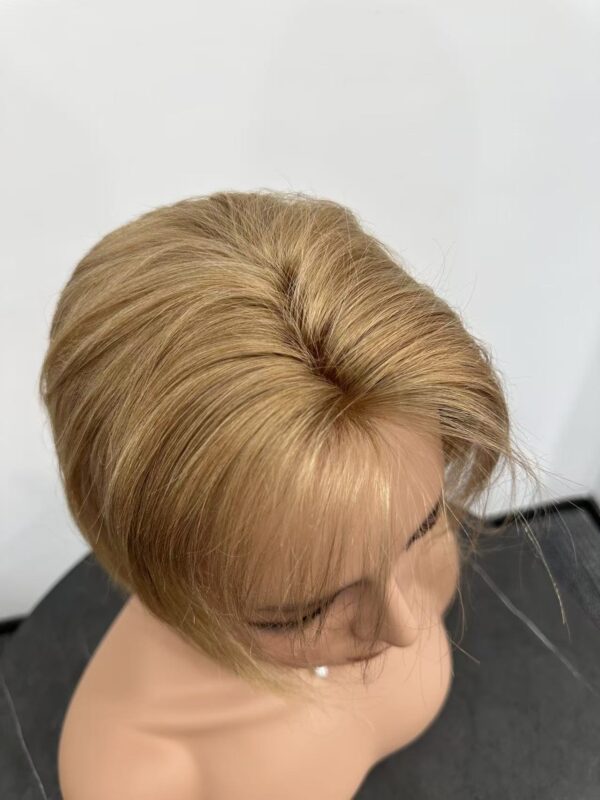
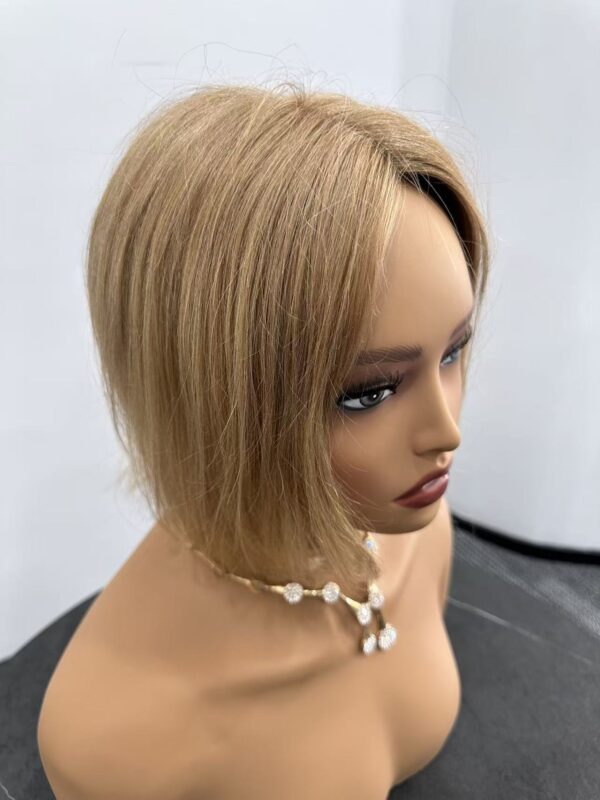
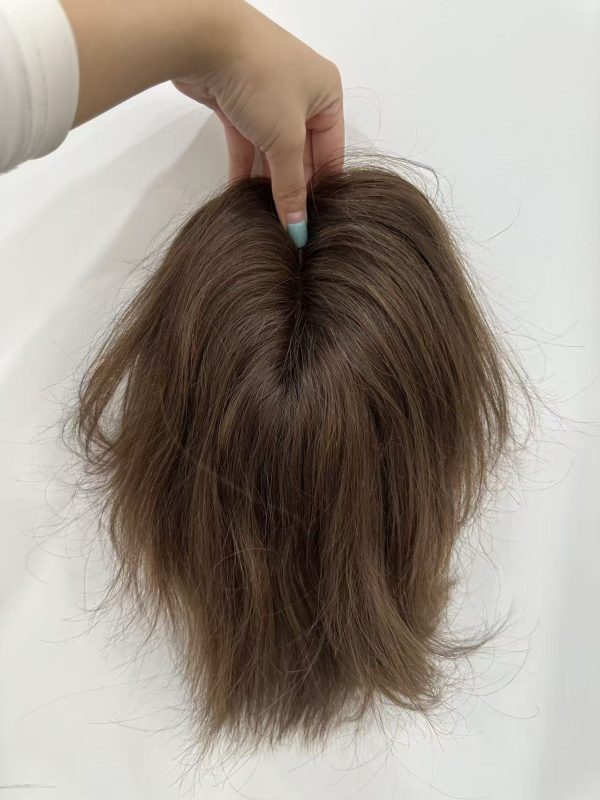
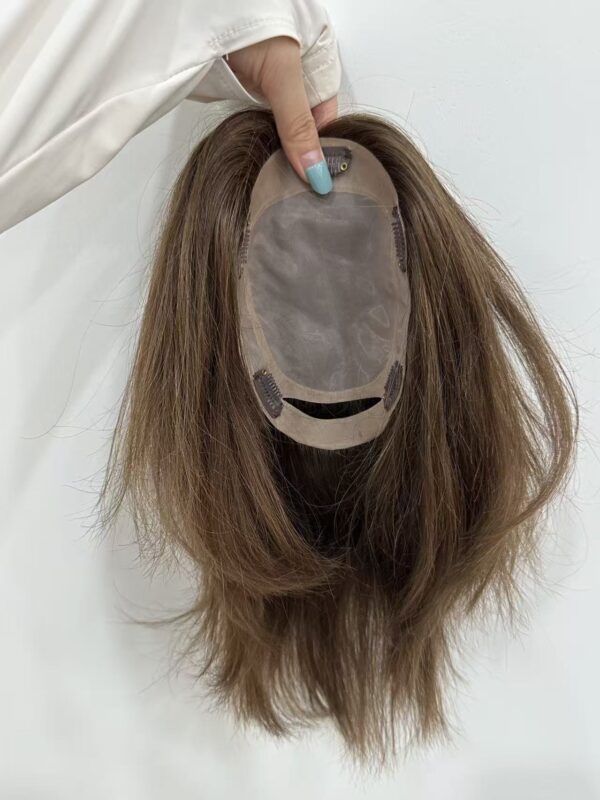
A natural-looking human hair wig is not created by hair quality alone. The most believable result comes from the right cap size, realistic density, a softly finished hairline, dimensional colour and a cut that suits your face. This guide explains exactly what to look for before buying—and what to adjust once your wig arrives.
Quick answer: To make a human hair wig look natural, start with an accurate fit and a cap construction that suits your preferred parting. Position the hairline correctly, keep the density believable, customise the cut around your face and style with light, flexible movement. Avoid excessive shine, heavy product and a perfectly uniform finish.
What Makes a Human Hair Wig Look Natural?
The best time to create a natural result is before you buy. Styling can refine a wig, but it cannot fully correct a cap that is the wrong size, a density that overwhelms your features or a colour that clashes with your complexion. Prioritise the following details.
1. A secure, comfortable fit
A wig that is too large may shift, bunch at the crown or lift around the ears. One that is too small can ride up and feel tight. Both problems affect how the hairline and overall shape sit. Measure the circumference of your head as well as front-to-nape, ear-to-ear and temple-to-temple measurements before choosing a size. Follow our wig measurement guide for a more accurate starting point.
2. The right cap construction
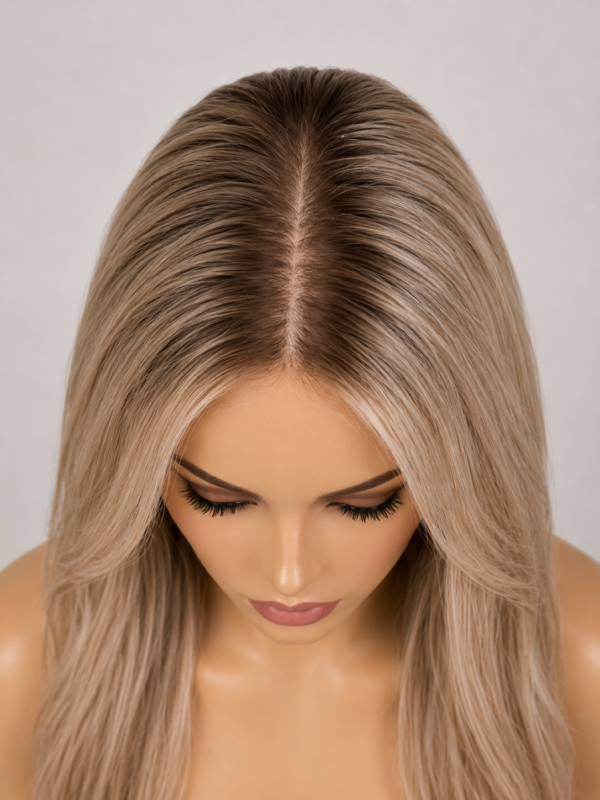
Cap construction determines where the hair appears to grow and how freely it can be parted. A lace front can create a softer-looking transition at the forehead and is useful if you like to wear hair away from your face. A monofilament top or part can imitate the look of scalp in the parting area. The best option depends on your usual hairstyle—not simply which construction has the most features.
3. Believable hair density
More hair does not automatically look better. Very high density can appear bulky at the crown and hairline, particularly if your natural hair has always been fine or medium in volume. Look for balanced fullness with a softer front and enough movement through the lengths. Your face shape, height, chosen length and styling preference all influence which density will look most proportional.
4. Colour with natural dimension
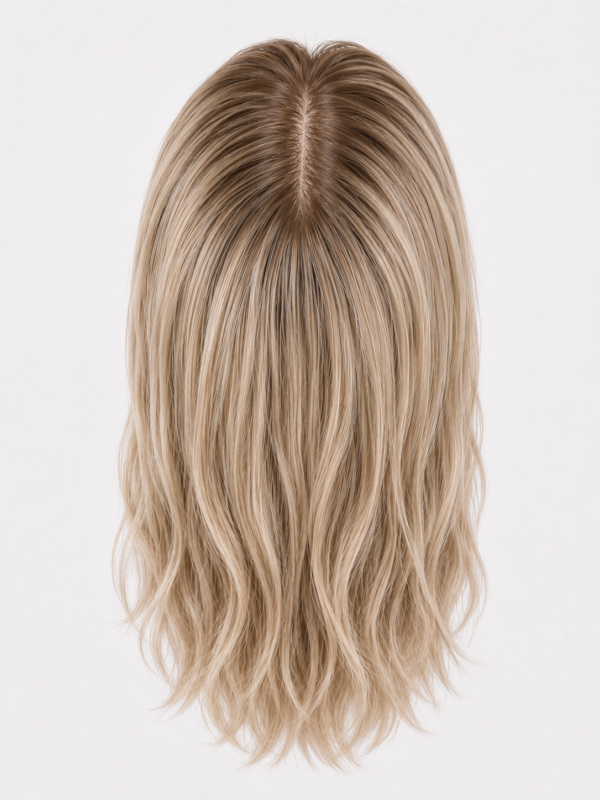
Human hair is rarely one completely flat shade. Subtle highlights, lowlights or a gentle root variation can add depth and prevent the colour from looking block-like. Assess shades in indirect daylight where possible. If you are buying your first wig, staying within one or two shades of a familiar colour usually makes the transition feel easier. If you want a bigger change, a professional colour consultation can help you consider skin undertone, brows and maintenance.
How to Make a Human Hair Wig Look Real: Step by Step
Prepare a smooth base
Flatten and secure your biological hair so there are no visible bumps beneath the cap. If you wear a wig cap, choose a close, comfortable fit and make sure it does not bunch behind the ears or at the nape. A smooth base lets the wig sit closer to the head.
Position the wig before securing it
Centre the wig using the ear tabs as a guide, then adjust the front so it follows a believable hairline position. Placing it too low can shorten the forehead and look heavy; placing it too far back may expose the cap or biological hair. Check the position from the front and both sides before fastening the adjusters or clips.
Refine the parting
Choose a part that suits both the cap construction and your face. Use the end of a tail comb gently—never scrape or pull at the base. A perfectly straight, overly wide part can look artificial, while a softly defined part with natural variation tends to be more convincing. Only alter knots or pluck a hairline if the wig is designed for customisation and you know the technique; over-plucking is difficult to reverse.
Soften the hair around your face
Face-framing layers, a side-swept fringe or a few shorter pieces can help the style relate to your features. A professional wig stylist can shape the hair while it is being worn, accounting for your face, shoulders and preferred part. Avoid cutting large sections yourself unless you are confident: human hair does not grow back.
Add movement, not stiffness
New wigs may retain a set shape from packaging. Gently shake the wig, separate the fibres with your fingers and style in small sections. Subtle bends, a softly curved end or relaxed waves usually look more natural than a rigid, identical curl pattern. For straight styles, preserve some body rather than pressing every strand completely flat.
Use minimal styling product
Heavy oils, waxes and silicone-rich layers can make hair separate into glossy sections and reduce movement. Begin with less product than you think you need, applying it mainly through the mid-lengths and ends. Keep rich products away from the cap, knots and attachment areas unless the product instructions specifically permit use there.
Style human hair with controlled heat
Confirm that the wig can be heat styled, use a heat protectant suitable for human hair wigs and choose the lowest effective temperature. Work in sections and avoid repeated passes. Excessive heat can dry the hair, reduce softness and shorten its useful life. Never apply a hot tool directly to lace, polyurethane or clips.
Check the result in daylight
Bathroom lighting can hide excess shine, visible lace or an uneven hairline. Look at the finished style near a window and take photos from the front, sides and back. This reveals gaps, bulky areas and stray lace more clearly than a single mirror view.
Wig or topper? If you have good coverage around the perimeter and want volume mainly at the crown or part, a human hair topper may blend more naturally with your own hair. If you want full coverage or a complete style change, a wig is often the more practical option.
Five Mistakes That Can Make a Wig Look Unnatural
Mistake
Why it stands out
What to do instead
Choosing maximum density
Extra volume can create bulk at the crown and front.
Choose density in proportion to your face, height and usual hairstyle.
Setting the hairline too low
It can alter facial proportions and make the front look heavy.
Adjust the wig gradually and check placement from every angle.
Leaving the factory cut unchanged
A generic fringe or length may not frame your face.
Have a wig stylist personalise the shape while you wear it.
Using too much shine product
Coated hair can look oily, separated and less mobile.
Use lightweight wig-compatible care sparingly.
Ignoring the back and sides
Exposed cap, uneven ends or trapped hair may be visible.
Use two mirrors or phone photos for a full-angle check.
How to Keep a Human Hair Wig Looking Natural
Natural movement depends on ongoing care. Human hair wigs do not receive oils from the scalp in the same way growing hair does, so overwashing, excessive heat and rough detangling can leave the lengths dry. A simple routine is usually best:
Detangle before washing: support the hair and work gently from the ends upward with a wide-tooth comb or suitable wig brush.
Wash only when needed: frequency depends on wear, climate and product build-up rather than a rigid timetable.
Use wig-appropriate products: follow the care instructions supplied with your specific hair and cap construction.
Condition the lengths: focus on mid-lengths and ends, avoiding knots or attachment areas unless directed otherwise.
Dry with minimal friction: blot rather than rub, then support the wig on an appropriate stand as advised.
Store it carefully: keep the wig clean, dry and protected from tangling, crushing and direct sunlight.
If the hair no longer falls naturally after washing, resist adding multiple products at once. Build-up may be the problem. Start with gentle cleansing and careful conditioning, then reassess the hair when fully dry.
Natural-Looking Wig Checklist
The cap feels secure without painful pressure.
The front sits at a believable position and the ear tabs are even.
The density looks balanced at the hairline, crown and ends.
The part suits the cap construction and is not unnaturally perfect.
The colour has dimension and flatters you in daylight.
The cut frames your face and works with your everyday wardrobe.
The hair moves freely without a heavy coating of product.
The sides, nape and back look tidy from every angle.
Frequently Asked Questions
Do human hair wigs look more natural than synthetic wigs?
Human hair can offer realistic movement, colour depth and styling flexibility. However, material alone does not guarantee a natural result. Cap fit, construction, density, hairline, colour and personalisation are equally important. A well-selected synthetic wig can look more convincing than a poorly fitted human hair wig.
What type of wig has the most natural-looking hairline?
A well-fitted lace-front wig can create a soft transition at the forehead, particularly for styles worn away from the face. The lace colour, knot finish, density and placement all affect the outcome. A fringe is another practical option if you prefer not to expose the front edge.
How do I reduce shine on a human hair wig?
First check for product build-up. Wash and condition the wig according to its care instructions, then allow it to dry fully before judging the finish. Avoid repeatedly layering oils or shine sprays. If the shine is caused by lighting or colour contrast rather than residue, a stylist can suggest a more dimensional shade or softer finish.
Can a hairdresser cut my human hair wig?
Yes, but choose someone experienced with wigs. A wig should usually be cut while you are wearing it because the cap position, density and fall of the hair differ from growing hair. Ask for conservative changes first; removed length or density cannot be restored.
Can I wear a human hair wig every day?
Many people do. Everyday comfort depends on correct sizing, cap construction, secure placement, climate and your scalp’s needs. Rotating wigs and following an appropriate care routine can also reduce wear on a single piece.
Find Hair That Feels Like You
Unsure about size, colour, density or whether a wig or topper will suit your needs? Explore natural-looking styles or get personalised guidance before you choose.
Read our FAQ or book a 1:1 consultation for tailored support.
About Lisa
15 years of experience in the wig industry
Extensive experience in human hair wigs, wig construction, fit, hair quality and styling. Dedicated to helping women find natural-looking hair that feels comfortable and truly suits them.
Not sure whether a wig or hair topper is right for you? This guide compares coverage, comfort, styling, maintenance and lifestyle fit for women choosing natural-looking hair in Australia.